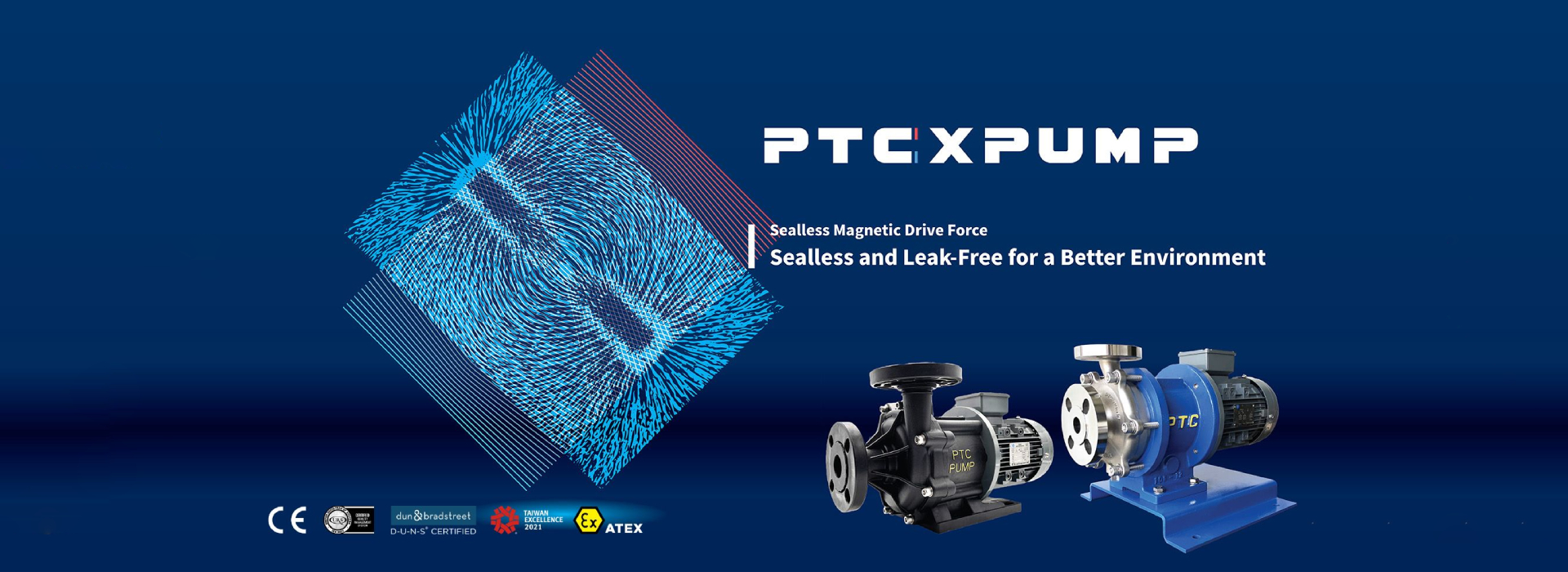
PTCXPUMP sealless magnetic drive pumps are designed to transfer acid or alkali chemical fluids. The materials of stainless steel SUS316L, GF-RPP and CFR-ETFE are used for better corrosion resistance. The sealless design comes with leak-free feature to avoid potential hazardous chemical leak for better environmental protection.



Core Concept


Brand Story
Environmental protection and user safety are always been the main focus of PTCXPUMP product development, The chemical pump structure is designed in the form of sealless magnetic drive, sealless design is to solve the leakage caused by mechanical seals and VOCs problem.
PTCXPUMP is a professional sealless magnetic drive pump manufacturer in Taiwan, with more than 40 years of experience in chemical fluid transfer solutions, we completed research and development and started mass production in 2014. The product materials provide engineering plastics GFRPP and CFRETFE, and stainless steel material SUS316L is available for selection, pump is being used in various range of chemical fluid, such as hydrochloric acid, sulfuric acid, hydrofluoric acid, toluene, ethanol and other high corrosion or flammable chemical fluids.
PTCXPUMP with sealless leakage free feature, products come with high-standard production processes and material selection, we follow standardization of internal work processes and enhance the reliability of product competitiveness and quality. Products are widely used in petrochemical, fine chemical, energy, semiconductor, optoelectronic, electronic, environmental protection and other industries.

FAQ
Sealless magnetic drive pumps vs Mechanical seal pumps.
Sealless Magnetic Drive Pumps
The sealless design structure is to use rear casing to completely seal the inner magnet, impeller and other wetted parts in the fluid chamber. Outer magnet transmits by motor shaft and inner magnet is connected to the impeller which rotates by magnetic traction and transfer fluid through the pump. Due to the isolation of the fluid by a rear casing, it creates a sealless containment. The sealless design brings leak feature.
Mechanical Seal Pump
A mechanical seal pump uses a driven motor to directly rotate the impeller and transfer fluid. The difference of a mechanical seal pump is that a motor shaft goes through rear casing and requires a mechanical seal to prevent any leak. Mechanical seals are consumables and maintenance or replacement is required for long-term use. Fluids often leak through the seal position and cause danger in a mechanical seal pump.

Application

Immersion Cooling Technology: Powering AI Servers for High Efficiency
Immersion Cooling Technology: Powering AI Servers for High Efficiency
Ultra-Low Temperature Stainless Steel Magnetic Pump for Electronic Fluoride Liquid Transportation
Ultra-Low Temperature Stainless Steel Magnetic Pump for Electronic Fluoride Liquid Transportation
Application of Hydrogen Energy and Applicable Pumps
Application of Hydrogen Energy and Applicable Pumps
What Are the Advantages of Sealless Magnetic Drive Pumps in Hydrogen Electrolyzers?
What Are the Advantages of Sealless Magnetic Drive Pumps in Hydrogen Electrolyzers?
Top 5 Benefits of Using Metallic Magnetic Drive Pumps in Hydrogen Stations
Top 5 Benefits of Using Metallic Magnetic Drive Pumps in Hydrogen Stations


Customer